
[ad_1]
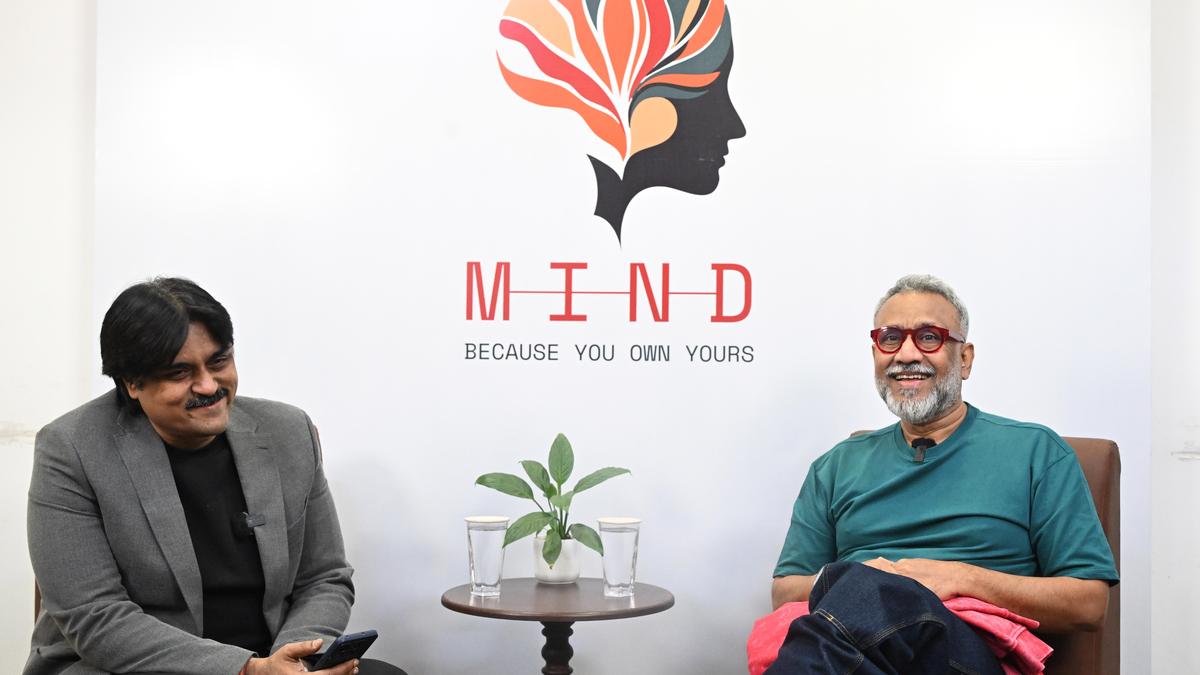
The filmmaker, identified for weaving highly effective socio-political narratives in movies like Mulk, Article 15, Thappad, Anek, and Bheed, and the OTT sequence IC 814: The Kandahar Hijack, is journeying by way of Indian cities to attach with audiences and honour the magic of single-screen theatres. His latest travels introduced him to an attractive dialog with Anuj Kumar for The Hindu MIND. Edited excerpts:
 You could have launched into this distinctive yatra to interact with audiences in smaller centres and achieve insights into the well being of single-screen theatres. What prompted this journey?

It’s tough to articulate what I’m doing and what the takeaway is. It began with individuals in Mumbai telling me that such movies work in such cities. It led to 2 issues. One, I’m from a small city, and I informed them they had been improper. However once they present me information, I’ve to agree with them. It received me confused. The opposite sweeping assertion that I saved listening to is that theatres are dying. It bothers me as a result of I need to make movies for theatres. So I assumed I’d go to 20-30 cities, go to these theatres, meet the theatre homeowners and managers, and determine it out.
Throughout your travels, did you discover what audiences in these cities count on from Hindi cinema, and the way does this examine to what’s being supplied?
I realised it’s been 35 years since I left a small city, and as I’ve modified, so have the cities. If I don’t know Banaras properly now, I actually don’t know Kanpur, Agra, or Jhansi. I discuss to individuals about their lives and cities, and so they typically speak about movies. There’s a transparent hole between what audiences count on and what they get. As somebody from Banaras and Aligarh who’s turn into disconnected from his roots, I consider others might really feel the identical, and this reveals in our movies.
Have the OTT platforms modified the sport?
There may be an elephant within the room. It’s known as the Web. And proper now, we’re standing too near the elephant. So, we don’t know its dimension. You realize, for those who stand this near an elephant for the primary time in your life, you’ll not know an elephant. You’ll should step again to see how large that is. So, all this AI, OTT…it’ll take us time to see the entire form. Sure, fewer individuals are going to theatres, however even fewer are going to malls and even fewer to bookstores. Have the books died? No. The truth is, e-book gross sales have elevated. Bollywood is a really handy punching bag. Medical doctors can be found on apps. Individuals are ordering dosa at dwelling, and so they don’t appear to thoughts how soggy it turns into. Equally, individuals are ordering movies for dwelling supply. What we will see has gone improper is the distribution of cash on either side of the digital camera. That ratio has gone lopsided. And that’s the OTT’s contribution.
Was your shift from Tum Bin and Ra. One to a socio-politically confrontational mode with Mulk and Article 15, natural or did one thing change inside you?
This was me. A small-town Banaras boy who lived by way of his early teenagers through the Emergency and witnessed riots throughout U.P. goes to Aligarh to check. Whereas going there, it felt like I used to be travelling to another nation, however there I had one of the vital fantastic experiences of my life. Within the course of, I should have turn into a bit political for positive. However once I reached Bombay, I used to be a mechanical engineer. I give up that, and I went on to make movies. It was in all probability, subliminally, a profession for me that lasted for a few years. After which I realised the potential of the artwork type that I used to be pursuing.
Mulk opens with a body that reveals how a nuqta, a dot, can fully change the that means. It exemplifies your knack for deftly presenting two contrasting views of the topic to the viewers. The place did it come from?
This should have one thing to do with my upbringing. In my home, my father and my mom had been each music buffs. There have been LPs of each Harivansh Rai Bachchan’s Madhushala and Begum Akhtar’s ghazals. I used to be keen on each. I keep in mind virtually the entire of Madhushala that Manna Dey had recorded. Then I went to Aligarh Muslim College for training and was launched to the Rolling Stones, the Beatles, and the that means of Faiz’s poetry. I believe I used to be simply lucky to have lived in two extraordinarily numerous cities throughout my adolescence. I don’t consider in blacks and whites. I discover gray essentially the most fascinating color.
In Mulk, the principle character is a practising patriotic Muslim, which is a rarity in mainstream Hindi cinema. They often don’t make such characters on the centre. How did it come about?
As a result of I in all probability know these individuals. I keep in mind I used to be new in Aligarh, and folks would say Allah Tala. I used to be fascinated as an ignorant individual. I puzzled, Allah miya ke naam ke aage taala kyon lagaya. (Why put a lock as a suffix to the identify of God?) Sooner or later, I requested a Maulana Sahab. He mentioned it was Ta’ala, the primary. You could or might not subscribe to it. However that is what it means to me. He left an impression on me; his kindness, persistence, and perception made me study one thing about him.
After which in the identical movie, you give Ashutosh Rana’s advocate ample house to articulate the bigotry that has swelled round us….
Nicely, I believe everybody ought to have a voice as a result of the second the so-called liberals begin stifling the opposing or inconvenient voice, then you’re being a fascist your self. Each voice ought to have house….
In Article 15, the protagonist is an upper-caste individual. Did you need to present the privileged patrons a mirror to years of discrimination? Or because the part felt that you just introduced him as an upper-caste saviour.
After I wrote the movie with Gaurav (Solanki), the concept was to take it upon ourselves to say we created this technique, that we should take part, and that we should take a result in change it. And sure, there have been some individuals, together with my Director of Pictures (Ewan Mulligan), who questioned the shot, the place Ayushmann (Khurrana) carries the (Dalit) lady in his arms. And he mentioned, no, I disagree with this shot. Why ought to he do it? Why aren’t the villagers doing it? And he’s (Ewan) a white man. I mentioned, in Indian movies, you want it: the viewers seems as much as the heroes, and I’m not making a white-saviour factor. However in all probability I used to be. And I took that criticism very respectfully, and it helped me perceive. Should you cope with contrarian views, you study.
Why did the Dalit chief performed by Mohammed Zeeshan Ayyub should die when in actual life the individual he’s primarily based on is rising in stature?
In such movies, there are specific characters you need to go away hope with, and particular actions you need to break somebody’s coronary heart to stoke motion. I made him die to stoke motion. I wished to wake you out of your slumber. It’s about what’s appropriate for the story.
So there’s a wrestle between social duty and storytelling…
Hanging a steadiness between the 2 may be very tough. I strive my finest to be accountable whereas telling a narrative, however I don’t suppose you’ll all the time strike a great steadiness.
In Bheed, Rajkummar Rao’s character, a Dalit policeman, is so acutely aware of his previous that he carries it with him even throughout moments of bodily intimacy together with his upper-caste girlfriend. The place did it come from?
I’ve learn numerous materials written by Dalit writers. Somebody who’s been denied his place in society lastly will get a uniform. It provides him social duty and energy, however what he has lived stays, and that causes efficiency anxiousness in him, not solely in his bodily intimacy together with his girlfriend, but in addition as a policeman, which is what I used to be making an attempt to say.
Whereas mounting Thappad, how did you recover from your individual biases whereas specializing in systemic patriarchy fairly than particular person villainy?
Typically, even after the entire expertise of constructing that movie, I’m positive, inadvertently, each from time to time, I take pleasure in misogyny as a result of it’s been many years of residing with a selected ideology. I realised this a lot later, it was truly my father who was serving to me to make that movie. Hailing from Jaunpur (U.P.), he labored in a authorities division. However in in the present day’s developed terminology, he’s an especially liberal man. In 1981, my sister had a boyfriend who would come dwelling and spend the entire day with us. On the time, I didn’t take a look at it as, wow, my dad and mom are permitting this. I believe papa performed an enormous function in how Thappad turned out. I’ve by no means seen him misbehave with my mom.
Some movies have a protracted and attention-grabbing post-release life. Ra.One is one in all them. With AI a actuality, we might learn a deeper that means into the premise of the sci-fi spectacle you made in 2011.
Ra.One has essentially the most fantastic post-release life. When it was launched, I used to be virtually depressed, not clinically, however sure. Seven years after its launch, in 2018, immediately all the things modified. Now they inform me it’s iconic. I strive to not take reward as severely as I do criticism. So, whereas I get numerous love for Ra.One now, additionally, what occurs is the youngsters who liked Ra.One is of their 20s now. After I get to fulfill them, I get an entire lot of affection. However, in fact, it was flawed. And, in fact, it ought to and will have been higher.
Typically your movies are inclined to get pedantic, and sure sections learn like an editorial.
Not pedantic, however I do get criticism for being a bit didactic typically. Filmmaking is like using a horse and holding the reins. Typically you may get just a little tighter than vital or maintain it looser than required. Additionally, by way of literacy and sensitivity, we’re a really numerous nation. A skinny inhabitants is sensitised in the direction of caste and gender equality. Nevertheless, there’s a big viewers that isn’t, and also you need to attain each. So, typically the outreach you make for this one finally ends up being didactic for that one.
Throughout the pro-government narrative, there at the moment are two variations. One is The Kashmir Recordsdata type of direct narrative, and the opposite is what we see in Dhurandhar, the place political messaging or agenda is dressed within the type of a spectacle. How do you see this pattern?
In my view, Dhurandhar is a seminal movie. Though I haven’t watched it, whenever you begin listening to comparable views from everybody, you appear to know the movie a bit. It’s powerful for filmmakers to observe their very own movies. It’s very tough for us to go completely clean and watch a movie. And proper now, it’s colored for varied causes, together with the talk surrounding the movie.
Why do you say that?
As a result of it has a genuinely giant subscriber base.
However you earlier mentioned that subscribers don’t matter; it’s the movie’s shelf life that actually issues.
In my opinion, it will have a protracted life.
Do you suppose it’ll change the best way filmmakers method the topic?
It is going to. Each profitable movie adjustments one thing for a while.
Whereas Dhurandhar blames the politicians for the Kandahar hijack, you maintain the forms accountable in your award-winning mini-series on the topic…
That’s my view, primarily based on intensive analysis I performed. I didn’t depend on anyone supply. From declassified U.S. authorities paperwork to the views of people that had been a part of the system on the time of the hijack, I learn no matter worthwhile I might lay my palms on.
The similarity is that, such as you, Aditya Dhar focuses solely on Jaswant Singh, the then Exterior Affairs Minister, because the political face of the disaster.
That was the reality. He should have completed his analysis.
What concerning the then House Minister?
He wasn’t very lively on this episode.
Is there house for a Mulk 2, or do you suppose polarisation has gone too far?
Youngsters (Israel-Gaza battle) are being massacred. Now we have gone too far. The entire world is complicit in inertia. So, let’s not idiot ourselves with an OTT sequence or a movie.
Source link

