

[ad_1]

Gabreil Mascuro (centre) and the solid and crew of ‘The Blue Path’ on the movie’s press convention on the 56th Worldwide Movie Pageant of India, Goa
| Picture Credit score: Ayaan Paul Chowdhury
Brazilian filmmaker Gabriel Mascaro arrived in Goa this week for the 56th International Film Festival of India, the place his newest characteristic The Blue Path was screened because the opener, after a year-long run throughout main festivals. Identified for his physique of labor that folds social texture into an ingenious type, the director was right here to debate why he constructed a dystopian highway story round a 77-year-old protagonist, and the way Brazil’s political local weather formed the movie’s imagined future. Talking at his competition Q&A, he outlines how he approached the fabric and what drew him to Goa at this second within the film’s life.

The Blue Path follows Tereza, who flees the state’s aged relocation program to pursue a long-delayed dream, performed by the flinty Brazilian stage veteran, Denise Weinberg. Mascaro recollects a riff on the standard cinematic behavior of linking age to nostalgia. He says his start line was intimate and fast: his grandmother. “She’s 97 now, however when she was 80 years outdated, she began portray when my grandpa had simply handed. I used to be very impressed by somebody within the late 80s who may restart and create a brand new that means for her life.”
From that temporary and concrete anecdote, he attracts a corrective insistence that aged characters occupy the current and never solely the previous, which determines the movie’s formal gamble. Mascaro wished an older protagonist to inhabit genres that often exclude them. “Usually, we by no means take into consideration the aged being a part of this,” he says. “In order that’s why I proposed to make this film mixing dystopia, highway film, coming of age; all of the genres that don’t settle for the aged.” The movie finally ends up dressing these acquainted style trappings within the sudden pores and skin of clandestine boat voyages and a seek for freedom as pressing as any adolescent quest.
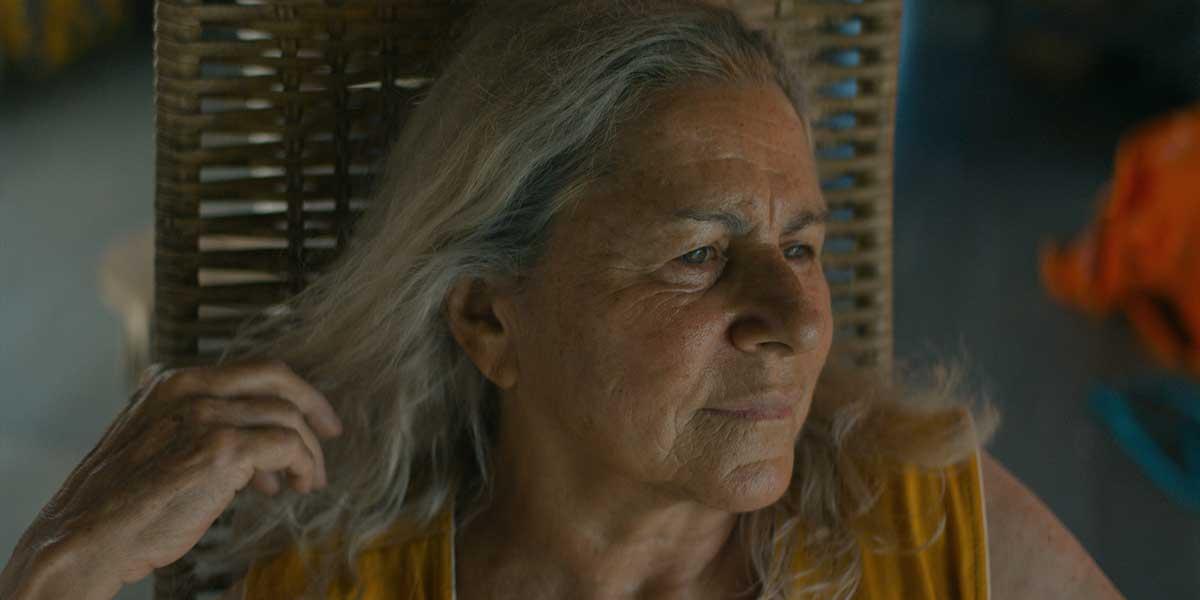
Denise Weinberg as Tereza in a nonetheless from ‘The Blue Path’
| Picture Credit score:
Desvia Filmes

The thought of freedom and liberation is the movie’s guiding mild. “It was crucial for me to start out desirous about the aged as ready folks able to rediscovering the current, discovering themselves, beginning to see a brand new that means for all times, and able to having pleasure.” He refrains from sentimentalising Tereza’s arc, and the scenes that probe her need, sexuality and danger, achieve this to dislodge a cultural behavior that has domesticated outdated our bodies into recollections.
These inventive selections sit towards a political backdrop Mascaro calls peculiarly uncooked. He refers to latest Brazilian years as a “second pandemic” beside COVID: “We had the pandemic, and now we have our authorities, led by [Jair] Bolsonaro. It was the equal of one other pandemic.” He describes Brazil’s cultural aftershocks of funding freezes and administrative dismantling of cultural establishments as materials that pushed him towards a speculative fiction that might register as believable. “It’s extra a few suspended actuality that offers with one thing that we will recognise. We expect it may very well be actual, nevertheless it’s not. However the emotions are nonetheless actual.”
The movie’s small surrealities — the titular psychotropic blue snail slime amongst them — grew from respect for native ritual and an ethic of invention. “You could find loads of equivalents which are for actual,” says Mascaro, naming ayahuasca and different vegetal medicines, however including: “I want to create by fiction my very own allegory to characterize and discuss psychotropics.” The blue snail goo within the movie capabilities as an allegory to discover revelation and altered perspective with out appropriating sacred practices.
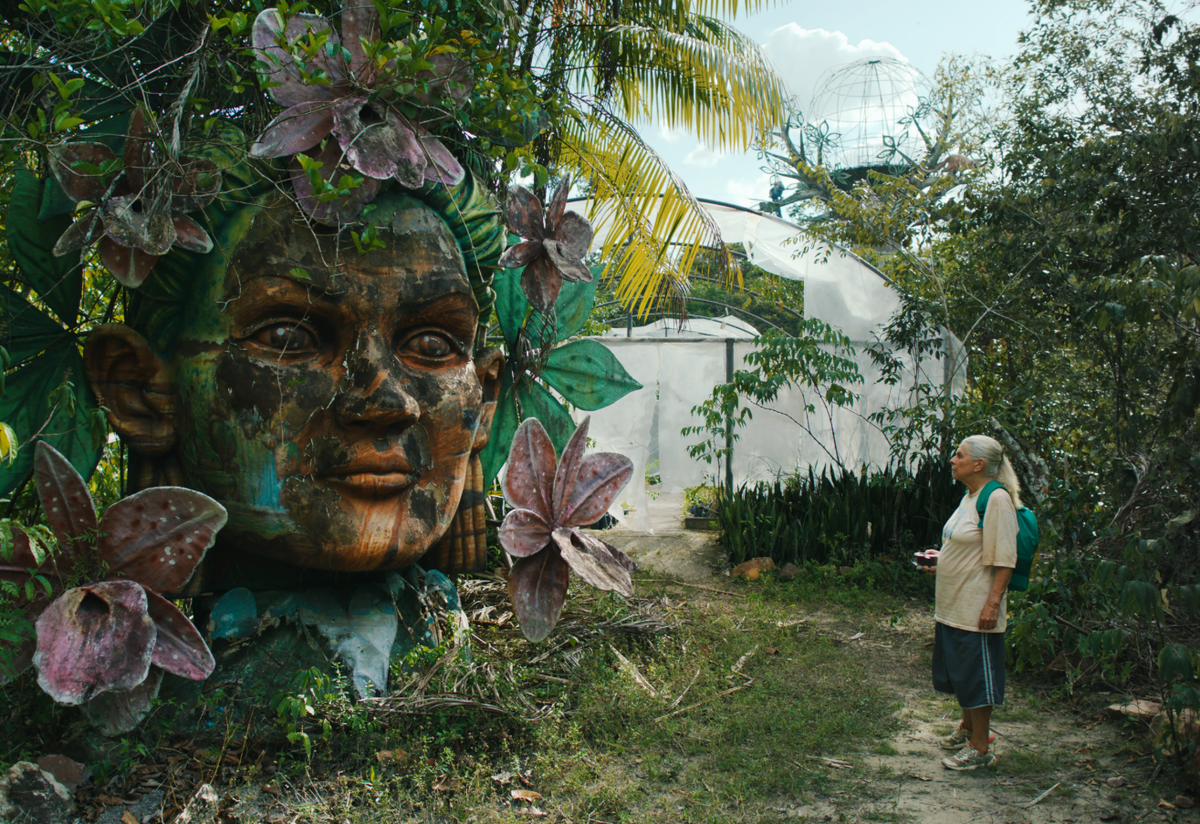
A nonetheless from ‘The Blue Path’
| Picture Credit score:
Desvia Filmes
Mascaro additionally mentions how visible and cultural notes from his time in Goa filtered into the movie’s invented areas and bolstered an sudden kinship between the 2 Lusophone areas. He had been desirous about the Amazon when parts he’d noticed in Goa recommended mise-en-scène prospects and sartorial selections just like the sharply tailor-made tropical police uniforms. “I used to be very obsessive about the casinos, since you don’t have that tradition in Brazil, and it labored very nicely for the film.” He describes how the likes of the floating Majestic Membership on line casino on the Mandovi River in Goa influenced the Golden Fish, a fish-fighting pit, in his movie. “It was very inspiring to be right here,” he provides, calling the encounter a wierd inventive coincidence that later looped again into changing into IFFI’s opening movie.

On illustration, notably of Amazonian and Indigenous cultures, Mascaro acknowledges limits and obligations. “It wasn’t essentially a film about Indigenous folks; it was about an aged topic,” he says. Even so, the Amazon’s cultural weight formed the manufacturing. Greater than 20 actors and crew members got here from the area’s theatre neighborhood, which is a alternative he describes as each sensible and moral. “While you speak concerning the Amazon area, there’s a enormous demand for illustration,” he explains. “Hopefully, increasingly movies can come from that area, directed by folks from that area.”
Revealed – November 21, 2025 07:16 pm IST
Source link

