
[ad_1]
GUWAHATI
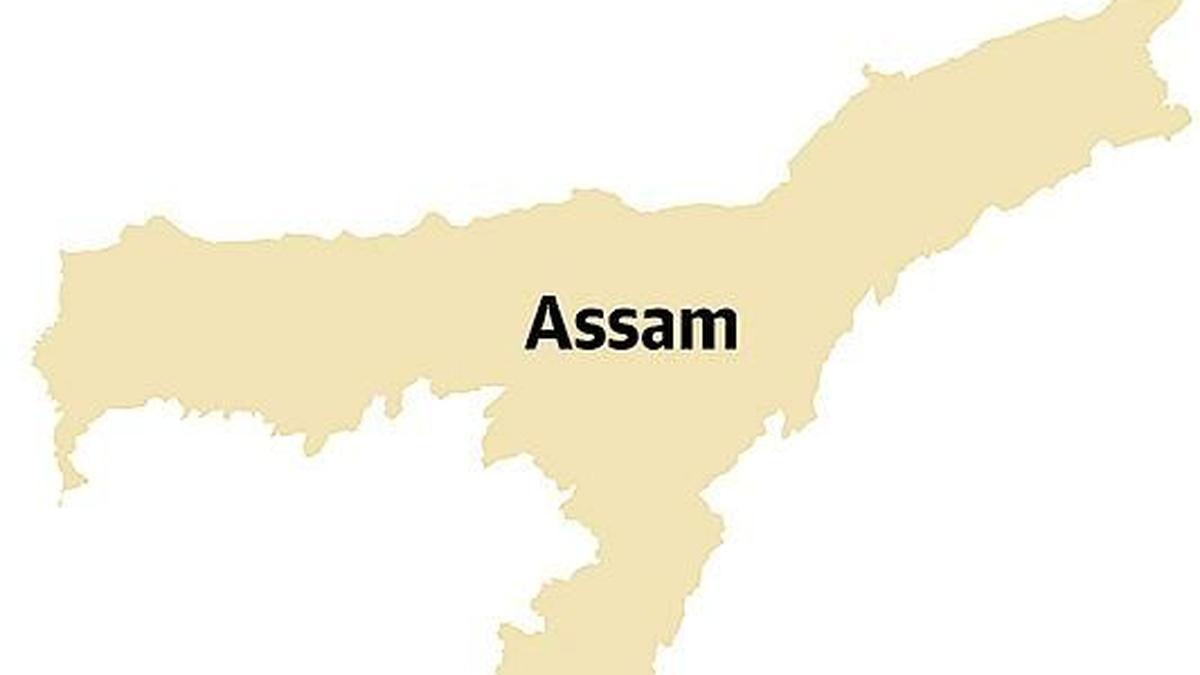
Many years after blood was spilt on the streets of southern Assam’s Silchar, a brand new tutorial examine examines how language, energy and id converged to supply one of many State’s most unstable conflicts.
The examine, printed in Modern South Asia, analyses the 1961 violence to argue that the disaster was not inevitable however the results of political decisions, coverage failures and deep-seated historic anxieties. It contends that language in Assam has by no means been merely a way of communication however has functioned as a marker of belonging and, at instances, a set off for violence.
The authors of the examine are Md. Chingiz Khan of the Centre for Comparative Religions and Civilisations at Jamia Millia Islamia, New Delhi, Ravi Shankar of the College of International Affairs at B.R. Ambedkar College, Delhi, and Bharti Shokeen of Sri Karan Narendra Agriculture College, Jobner.
The examine traces the flashpoint to 1961, when the Assam authorities amended its Official Language Act to recognise Assamese as the only official language, whereas permitting restricted use of Bengali in components of the Barak Valley. The choice triggered widespread protests throughout the area.
Firing by safety forces at demonstrators in Silchar left 11 folks lifeless on Might 19, 1961, a second that is still deeply etched within the collective reminiscence of the Barak Valley.
The examine argues that decreasing the episode to an “Assamese versus Bengali” battle obscures its deeper complexity. Assam, it notes, has lengthy been a multilingual and multi-ethnic society, house to Ahoms, Bengalis, tribal communities, Manipuris and Muslims, whose coexistence was disrupted by inflexible language insurance policies.
“An intersectional strategy, contemplating temporality, ethnicity, area, tradition, and politics, affords a extra nuanced understanding [of the issue]. Assam’s id has been formed by centuries of migration, cultural trade, and layered histories, making inflexible categorisations reductive,” the examine observes.
Colonial legacy
The examine underlines the decisive function of colonial insurance policies in shaping linguistic hierarchies. British directors categorised and ranked languages by censuses and surveys, reworking fluid identities into inflexible classes.
The imposition of Bengali because the language of administration in nineteenth century Assam marginalised Assamese audio system in courts and authorities employment. When Assamese later regained official standing, the steadiness shifted, fuelling resentment amongst Bengali audio system, notably in Bengali-majority areas resembling Cachar.
In response to the examine, language grew to become intently tied to entry to energy. Official recognition translated into employment alternatives, management over land information and political affect. Communities that felt excluded got here to view language coverage as an existential risk.
In Cachar, the place Bengali audio system fashioned an awesome majority, the enforcement of Assamese was perceived as cultural domination. Within the Brahmaputra Valley, concessions to Bengali audio system have been seen as undermining Assamese id.
The examine notes that the violence of 1961 mirrored each in style anger and institutional failure, with the Centre and the Assam authorities underestimating the depth of the disaster. Interim measures such because the Shastri Components failed to deal with underlying tensions. Political events have been divided, bureaucracies have been paralysed, and sections of the media, notably newspapers printed from Calcutta, have been accused of aggravating the state of affairs.
Past communal binaries
The examine rejects the notion that the motion was communal in nature. Protesters on all sides included Hindus, Muslims and tribal teams, underscoring that language solidarity usually reduce throughout non secular strains. This, the authors argue, exposes the constraints of narratives that body the battle as Hindu versus Muslim or indigenous versus migrant.
It additionally attracts consideration to smaller linguistic communities whose considerations have been marginalised as Assamese and Bengali teams competed for dominance. Tribal languages, the examine notes, confronted the danger of gradual erosion amid the bigger wrestle.
The authors conclude that the fault strains uncovered in 1961 proceed to form modern debates round citizenship, belonging and indigeneity, notably within the context of the Nationwide Register of Residents and the Citizenship (Modification) Act. The lesson, they argue, is that imposing monolingual options in a linguistically numerous society is a recipe for unrest.
Printed – January 02, 2026 05:10 pm IST
Source link

