
[ad_1]
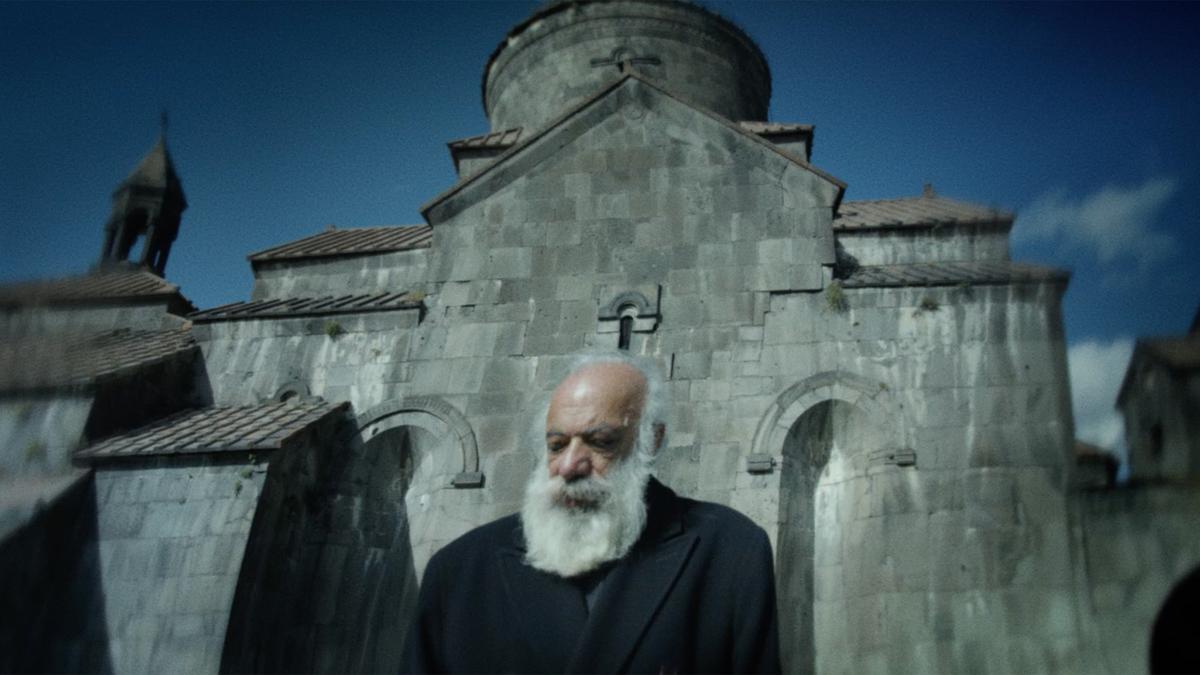
Lullaby for the Mountains is a debut that runs on belief. Shot on location and backed by Béla Tarr as govt producer, it has travelled from Sheffield DocFest to its Asian premiere on the Worldwide Movie Competition of India 2025 because the lone Armenian choice. The wordless, 79-minute drift, divided into 15 chapters, follows a lone determine by means of Armenia’s highlands and monasteries. That determine, is filmmaker Hayk Matevosyan’s father.

My first brush with Lullaby for the Mountains was additionally my first time contained in the unusual, hybrid colonial shell of Macquinez Corridor on the nerve centre of IFFI in Panjim. I had picked this virtually random Béla Tarr–backed docu-montage as one in every of my earlier screenings, lured in by the promise of an audio-visual marvel to baptise the week. What I received as a substitute was a slower, stealthier form of occupation that overwhelmed in essentially the most sudden methods. Over 79 minutes I drifted out and in of wakefulness, slipping into a lightweight, enchanted semi-haze the place whispers bounced off stone, bird-call and water flowing by means of streams folded into one another, and essentially the most haunting liturgical voices seeped by means of the corridor like incense. It turned one of the disarming theatrical experiences I had all competition, as a result of it made relaxation itself really feel respectable.
A nonetheless from ‘Lullaby for the Mountains’
| Photograph Credit score:
Dolly Bell Movies
There’s something so intimate about being so completely comfy in a public cinema, your physique unclenching in the dead of night whereas a big group of strangers round you give up to the identical tranquillity. The movie stored testing that pact. By its shut, a couple of third of the initially packed corridor had trickled out in small, impatient migrations, abandoning a thinner congregation that felt oddly monastic. Staying until the top carried a particular form of cost that went past cinephilic diligence. It felt earned, and a little bit sacred, virtually like a blessing. I believe I lastly understood what Béla Tarr may’ve been nudging us towards all alongside (Sátántangó, you monumental beast, I believe I’m lastly prepared).

Because the writer-director-cinematographer-editor, the construction for the movie lived in Hayk’s head lengthy earlier than it took form within the edit. “I knew earlier than filming that the movie could be lower into chapters,” Hayk says in a later interview. “However I didn’t have the precise rely of what number of chapters we’d find yourself with.”
For some time he thought of spelling issues out. “I had concepts of getting some voice-over narration through the modifying stage,” he admits. “I ultimately understood that I wished to rely absolutely on the visuals and soundscape to hold the movie’s rhythm.” The duty then was to make that rhythm coherent. “I’d say the toughest a part of the modifying course of was discovering the best tempo for the scenes and determining how these scenes might intertwine on a extra dramaturgical stage and make sense on the planet I created.”
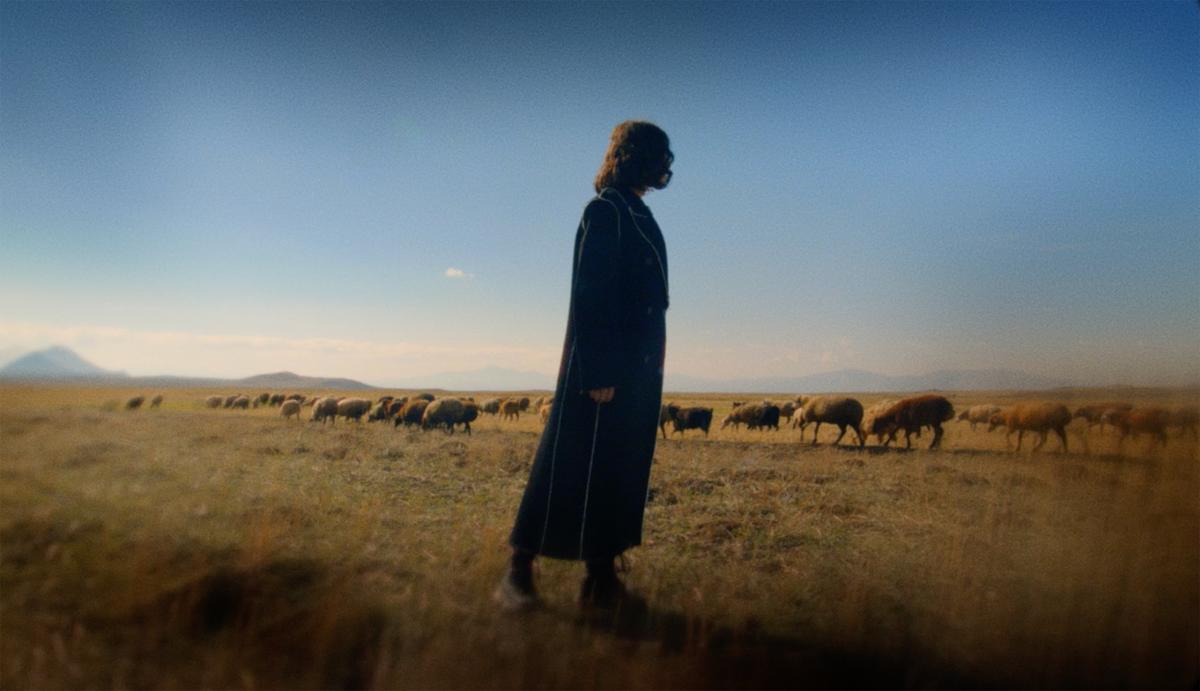
A nonetheless from ‘Lullaby for the Mountains’
| Photograph Credit score:
Dolly Bell Movies
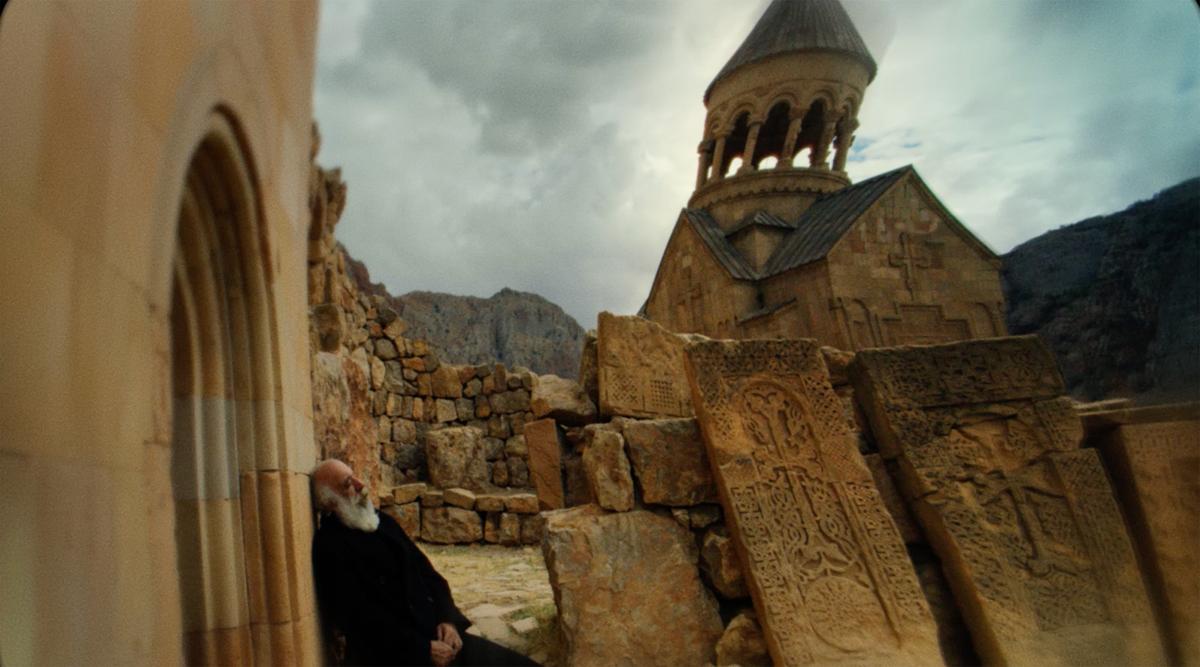
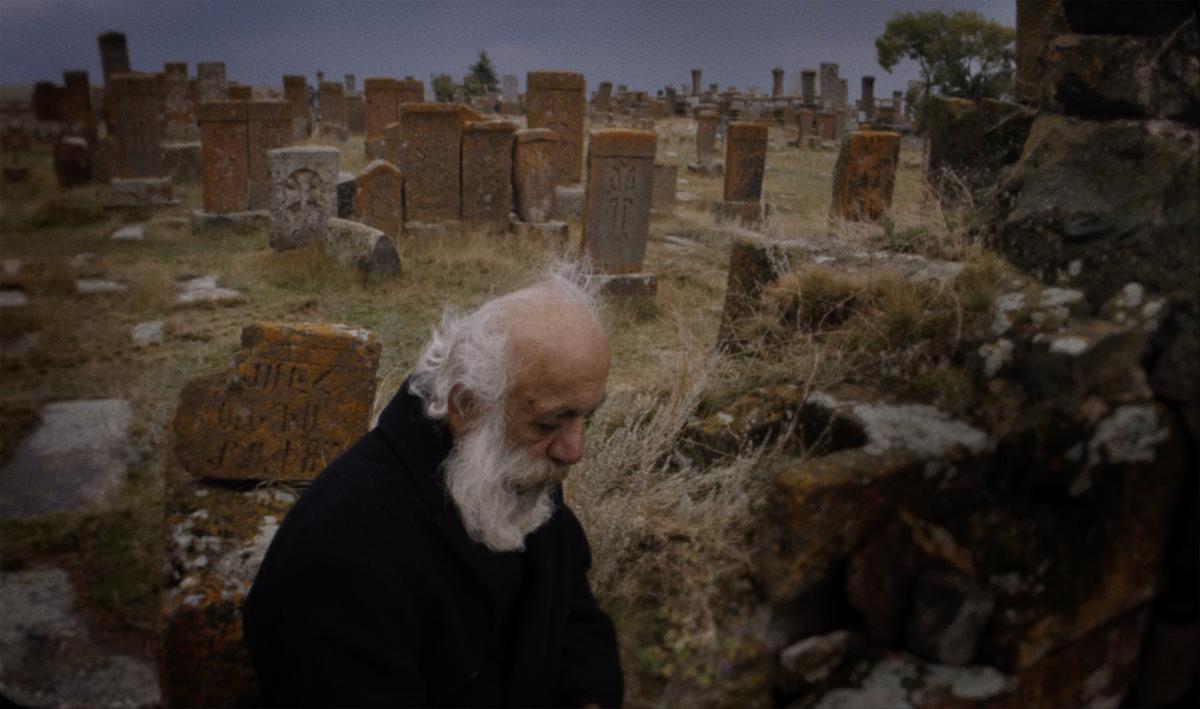
That world is made from church buildings hollowed by centuries, alongside gravestones, plateaus, and underground passages that predate him. Strolling into these Armenian landscapes, he admits to have felt a dedication past his personal story. “In fact, I do really feel an obligation,” he says. “Each time we had been in a selected location, we wouldn’t simply soar into filming. My filming type is a bit completely different. I wish to spend time within the place, and that’s what I really discovered from Béla Tarr. He would encourage you to not rush and simply be on the location. He’d say that the situation is among the most essential characters of the movie.”
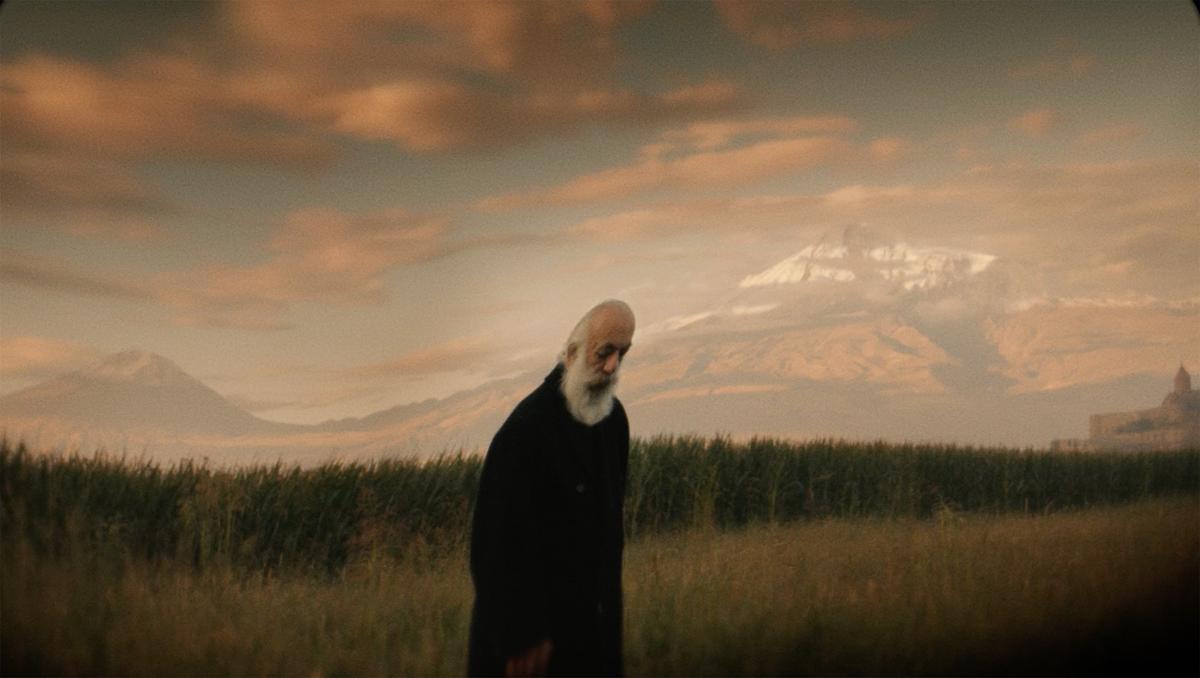
On many days, the crew was merely father, son, and digital camera. One of many movie’s most tender photographs got here out of that ready, shot within the village his grandfather comes from, the place his father lies sleeping on the bottom. “That scene got here to be on the spot; it was a really spontaneous second the place each my father and I felt like we wished to lie down on the land,” Hayk remembers. “I put the digital camera in between us and simply filmed my father asleep, hugging the land.”
A nonetheless from ‘Lullaby for the Mountains’
| Photograph Credit score:
Dolly Bell Movies
He had by no means labored as a cinematographer earlier than – on shorts and music movies he relied on his longtime collaborator Justin Richards. When Richards couldn’t journey to Armenia, Hayk picked up the digital camera himself and introduced him again in later because the movie’s colourist. “That stage of post-production is creatively crucial for me, because you begin trying on the photographs as a painter,” he says. “Working with Justin on it was like taking a look at a clear canvas and re-coloring scenes to present a brand new, extra surreal, dreamy tone to the visuals.”

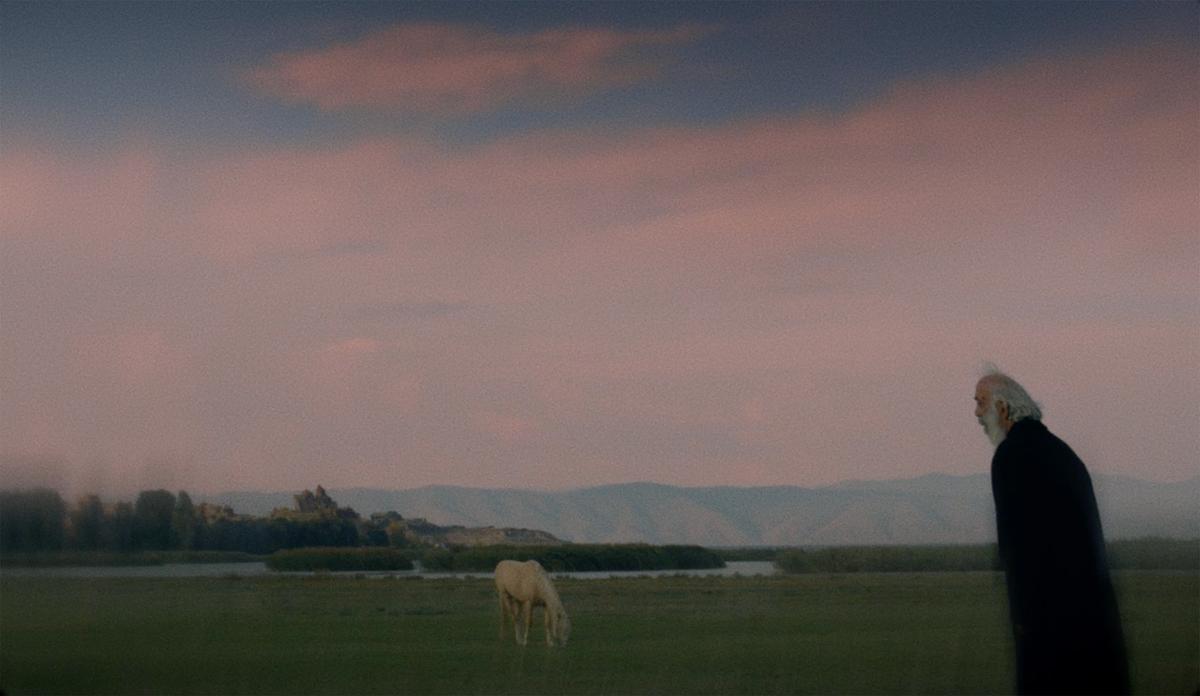
The dream logic is bolstered in-camera, and the often humorous warped distortions of a leaning horse and elongated our bodies, come from someplace extra non-public. “The thought of utilizing distorted lenses and having the panorama and characters seem extra elongated and warped got here from my desires,” he says. “The desires I see often have visuals which are distorted, very like within the movie, so I form of wished to recreate the photographs in my movie as near my desires as doable.”
On this scheme, folks belong to the terrain. “Within the movie the folks or they could even be spirits, are like landscapes,” he says. “For me, the human face is as fascinating as a panorama, so there have been photographs within the movie that I attempted to juxtapose the human face with the panorama or historical church buildings. And utilizing broad lenses even for shut ups helped to get a really distinctive manner of seeing the tactile emotional state of the face and eyes.”
A nonetheless from ‘Lullaby for the Mountains’
| Photograph Credit score:
Dolly Bell Movies
Phrase had already travelled that audiences typically drift off through the movie. Some have mentioned trance, others say sleep — it was a sample I’d already lived by means of in Macquinez Corridor. Given the title, the drowsy drift feels virtually intentional, and Hayk appears fully comfy with each responses. “I’m very open to any interpretation the viewers involves,” he says. “I personally love the movies the place I might go to sleep, dream, and get up and virtually really feel like my dream is constant on a giant display screen whereas watching the movie.”

Hayk’s scepticism towards film-school orthodoxy is formed by two names that loom over the mission: Werner Herzog and Béla Tarr. He met the legendary auteurs in several corners of the world. “With Werner, it was in 2018 in a Peruvian Jungle, the place we made a brief movie beneath his steering. And in 2019, I made one other brief in Locarno beneath the mentorship of Béla.” Whereas their strategies might have diverged, what stayed with him was their core ethic. “What each of them have in widespread and continually would inform is to not await the best time to make a movie, and to not comply with particular industry-set guidelines on easy methods to make a movie. They’d at all times push for risk-taking.”
A nonetheless from ‘Lullaby for the Mountains’
| Photograph Credit score:
Dolly Bell Movies
Producer Luiza Yeranosyan, his associate at Dolly Bell Movies, utilized that lesson to the price range. “Our technique for this movie was a bit unorthodox,” she says. “Hayk had a really clear imaginative and prescient and a ardour to make this movie, and he had a selected time-frame through which he wished to make it. As a substitute of taking the route of making use of and ready for presidency or public funds, we financed the movie by means of our firm, and likewise secured non-public investments.”
They hung out with locals in each a part of Armenia they visited, shifting by means of locations that had been already a part of Hayk’s map from childhood journeys together with his father. “There was a mutual respect when filming — respect towards the folks, towards the land, and towards the traditional websites and church buildings. The movie is a love letter to Armenia, to the tradition, to the land itself, so there was no different manner than to permit the folks and the land to simply accept us first earlier than we even began filming any photographs.”

Even now, days later, I catch myself wafting again to that room in Panjim, with the faint echo of chants, and reminiscences of these vignettes of man curled into the earth. And certain, if I did drift off for a chapter or two, Lullaby for the Mountains by no means held it in opposition to me, which is likely to be essentially the most beneficiant factor a movie can do.
Lullaby for the Mountains was screened on the 56th Worldwide Movie Competition of India in Goa
Revealed – December 03, 2025 06:12 pm IST
Source link

